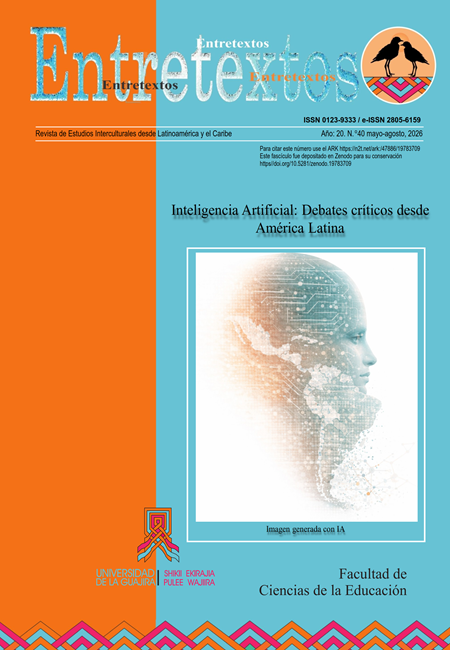
Vol. 20 No. 40 (2026): Artificial Intelligence: Critical Debates from Latin America (May–August 2026)

This issue is devoted to the critical analysis of Artificial Intelligence from a Latin American perspective. It examines how these technologies affect education, cultural diversity, and structures of power, moving beyond merely technical approaches in order to foreground the region’s social context. The articles explore concepts such as algorithmic coloniality and digital citizenship, questioning whether automation represents a promise of progress or a threat to job security. Through an interdisciplinary approach, the issue seeks to foster an ethical dialogue on technological sovereignty and the training of professionals in a world increasingly mediated by algorithms. It brings together voices from different countries to build a detailed map of the tensions, risks, and opportunities that the digital age presents for societies in the Global South.
https://doi.org/10.5281/zenodo.19783709