

Keywords
higher education
artificial intelligence
public university
knowledge production
How to Cite
Abstract
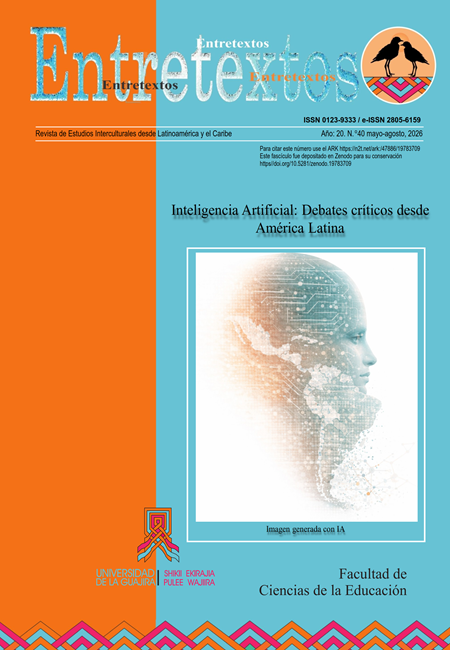
This interview with Dr. Leonardo Yamazaki Maza analyzes the contemporary impact of artificial intelligence (AI) on higher education, scientific research, and the socio-technical transformations of knowledge. From a critical hermeneutic perspective, the specialist argues that the defining feature of the current technological revolution lies in the development of hardware and algorithms, and in the increasing centrality of the human capacity to formulate complex questions that guide the operation of AI systems. The quality of the results generated by these systems depends directly on the intellectual quality of the questions posed to them. The interview also addresses key debates related to academic integrity, the limits of plagiarism in AI-assisted writing environments, biases present in algorithmic models, and the ethics associated with the use of surveillance and facial recognition technologies. Furthermore, it reflects on the role of AI in accelerating global scientific production and in managing large volumes of information. The dialogue explores possible future scenarios for the university, suggesting that these institutions could gradually transform into spaces primarily dedicated to research, critical debate, and the generation of ideas, in a world where access to knowledge is increasingly immediate and mediated by smart technologies.

This work is licensed under a Creative Commons Attribution-NonCommercial-NoDerivatives 4.0 International License.