

Keywords
ethics
university education
academic integrity
artificial intelligence
How to Cite
Abstract
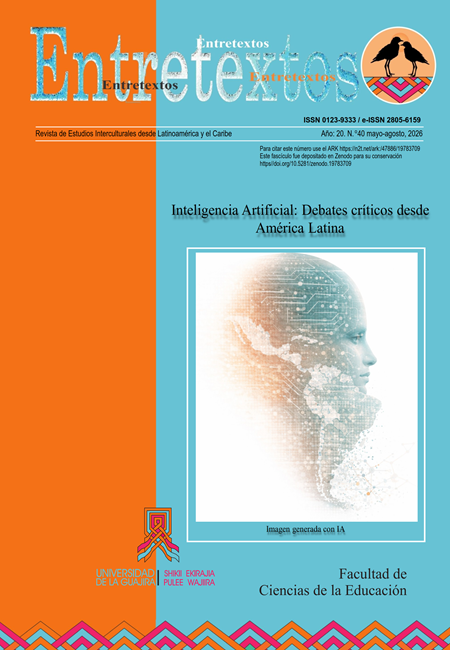
The implications of using Artificial Intelligence (AI) in university settings are analyzed based on a real-life case study in which student essays showed significant dependence on AI-generated content. The research combined interviews with experts in education and technology with a documentary review of international guidelines from organizations such as UNESCO, the OECD, and the European Commission. The analysis was guided by key questions: How can educators distinguish authentic learning from AI-produced content? What ethical boundaries delimit legitimate use from academic dishonesty? How should universities adapt their assessment methods in the face of these emerging technologies? The study takes a humanistic approach that highlights the need to train students in the critical, responsible, and ethical use of AI, rather than restricting its use. The results underscore the urgent need to update institutional policies, promote responsible AI governance, and drive pedagogical innovations that allow these tools to be integrated without compromising academic integrity.
References
Comisión Europea. (08 de abril de 2019). Directrices éticas para una IA fiable. https://digital-strategy.ec.europa.eu/en/library/ethics-guidelines-trustworthy-ai
Guerra Jáuregui, M. (2023). Inteligencia artificial en la educación: ¿un enemigo o un aliado?. Observatorio del Instituto para el Futuro de la Educación, Tecnológico de Monterrey. https://observatorio.tec.mx/edu-news/inteligencia-artificial-en-la-educacion-un-enemigo-o-un-aliado
Huizinga, J. & Imaz Echeverría, E. (1972). Homo ludens. Alianza Editorial.
IEEE. (2019). Diseño éticamente alineado: Una visión para priorizar el bienestar humano con sistemas autónomos e inteligentes (1.ª ed.). Iniciativa Global del IEEE sobre Ética de Sistemas Autónomos e Inteligentes. https://ethicsinaction.ieee.org/
Morduchowicz, R. (2021). Adolescentes, participación y ciudadanía digital. Fondo de Cultura Económica.
OECD.AI. (2019). El Navegador de Políticas de IA de la OCDE. https://oecd.ai/en/dashboards
UNESCO. (2021). Recomendación sobre la ética de la inteligencia artificial. https://unesdoc.unesco.org/ark:/48223/pf0000381137

This work is licensed under a Creative Commons Attribution-NonCommercial-NoDerivatives 4.0 International License.