

How to Cite
Abstract
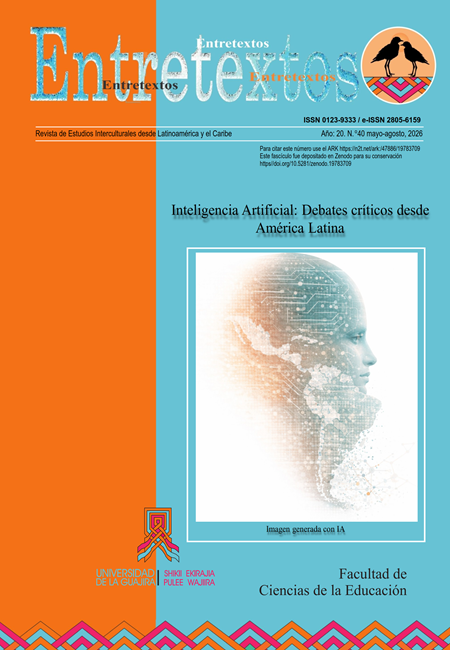
This dossier examines Artificial Intelligence as part of a sociotechnical regime shaped by data, automation, prediction, and geopolitical struggles over technological control. From a situated Latin American perspective, it brings together seventeen manuscripts that analyze its effects on education, knowledge production, power relations, and contemporary subjectivities. The volume engages with the coloniality of power, critical pedagogy, and the center–periphery approach in order to move beyond technocentric readings and understand AI within contexts of technological dependency and structural inequality. Organized around education, algorithmic coloniality, and everyday experiences, the dossier sets out a critical research agenda aimed at imagining more just digital futures.
References
Castells, M. (1996). The Rise of the Network Society. https://doi.org/10.1002/9781444319514
Srnicek, N. (2018). Platform Capitalism. https://politybooks.com/bookdetail/?isbn=9781509504862
Kitchin, R. (2017). Thinking critically about and researching algorithms. https://doi.org/10.1177/2053951717736335
Noble, S. U. (2018). Algorithms of Oppression. https://nyupress.org/9781479837243/algorithms-of-oppression/
Crawford, K. (2021). Atlas of AI. https://yalebooks.yale.edu/book/9780300209570/atlas-of-ai/
Couldry, N., & Mejias, U. (2019). The Costs of Connection. https://doi.org/10.1515/9781503609754
O’Neil, C. (2016). Weapons of Math Destruction. https://weaponsofmathdestructionbook.com/
CEPAL (2022). Datos y desarrollo en América Latina.

This work is licensed under a Creative Commons Attribution-NonCommercial-NoDerivatives 4.0 International License.